“Today is a new day with no mistakes in it… well, no mistakes in it yet.”
— Miss Muriel Stacy, Anne with an E
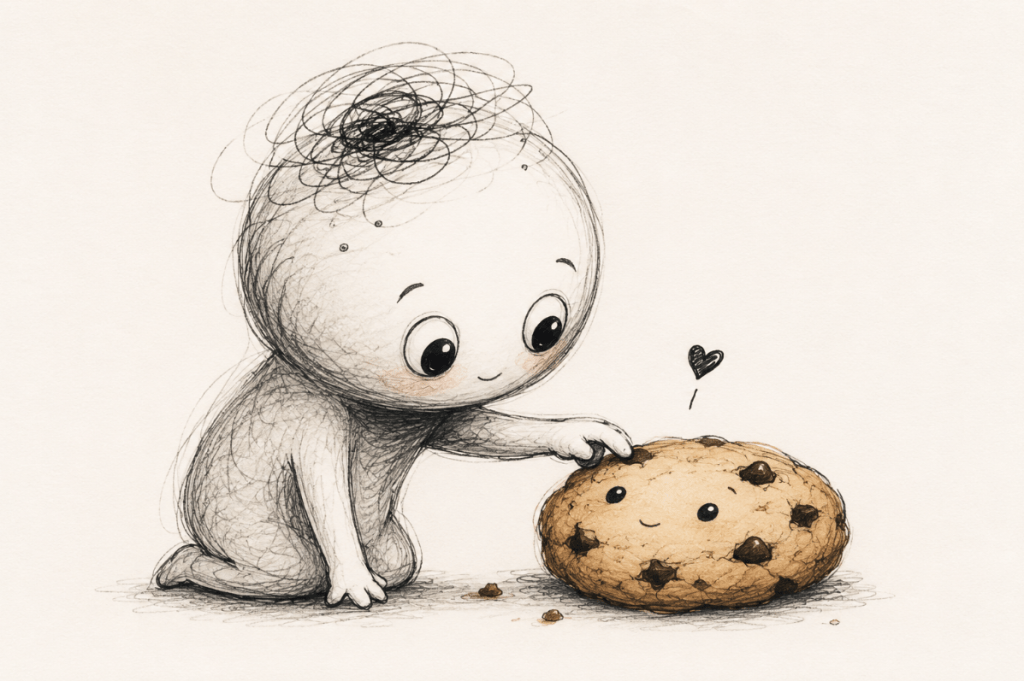
The birth of a Mistake:
A Mistake’s life begins like any other creatures’ does: it begins when a Mistake is born. Whether born out of negligence, stupidity, or sheer coincidence, the Mistake is created when something goes wrong. The performer of said “going wrong” acts as the parent—though unwillingly—of the creature.
Facts about Mistakes:
A Mistake has an indefinite life span, often dying seconds after their creation, but also commonly living for the duration of the parent’s life, haunting their minds. According to Sam Bucker, on Showbiz Cheat Sheet, an average parent births 118 Mistakes per day. Compare that to the human population of 8.2 billion, and it can be logically assumed that a total of 967,600,000,000 Mistakes are made per day, though this figure likely underestimates the correct number. The power of a Mistake comes from the accident from which they were made; more severe accidents lead to far more potent Mistakes.
Getting rid of a mistake:
A majority of the public despise Mistakes, treating them as unwanted pests or nuisances to be disposed of. Getting rid of this species, however, is easier said than done. Hence, for all of the majority looking to eliminate a Mistake, provided are two of the most common and reportedly best solutions to get rid of them.*
- The classic, however ineffective and morally incorrect, solution: Ignore them. If you stop paying attention to the creature that so desperately needs attention to survive, they eventually die. Usually. Forgetting about their existence and postponing dealing with them to a later date is not total procrastination—it puts things into perspective. Also, a surprisingly large group of people find said procrastination to be a useful coping mechanism.
- The take-the-high-road, painstaking solution that might be more trouble than it’s worth (writer’s recommendation): Reverse the conditions from which it was born. If you fix the accident that led to their birth, the Mistake dies. On the very spot. Possible solutions include but are not limited to: apologize, recalculate, or replace the broken vase. Whatever action you take could go a long way in not only killing the creature but making your relationships, and your life as a whole, far better.
* Please note that the provided solutions are the “easier said” part of the equation, and the “done” part is a burden that rests solely on the shoulders of the reader to complete at their leisure.
A note from the author:
I had mentioned earlier that Mistakes are viewed by the public eye as pests. Why? Probably because they, as well as their repercussions, are hard to deal with. But nobody would learn anything without them. Nobody would grow. No change would occur. Animals only learn to adapt or do something differently when they make a Mistake that calls for change. Some of the best ideas were made from mistakes: the choco-chip cookie was only created because the baker ran out of baker’s chocolate and hoped that a chocolate bar would melt into the dough. Mistakes help us evolve into versions of ourselves unlike before, and those versions don’t repeat those mistakes, but instead, make new ones.
After all, a Mistake, like any other creature, is essential to the survival of the world’s ecosystems. In the end, a Mistake is your offspring. It might be flawed, it might be strange, but it’s a reflection of your humanity, and a Mistake deserves your love just as much as any other creature does.


Leave a comment